

- Πληροφοριακά Στοιχεία
- Δημοσιεύθηκε : 22 Μάρτιος 2014
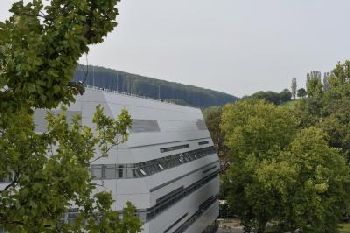
Plants, like animals, employ hormones as messengers, which coordinate growth and regulate how they react to the environment. One of these plant hormones, auxin, regulates nearly all aspects of plant behavior and development, for example phototropism, root growth and fruit growth. Depending on the context, auxin elicits a range of responses such as cell polarization or division. In this week's edition of Science (DOI:10.1126/science.1245125), a team of researchers including Jiri Friml from IST Austria and led by Zhenbiao Yang of the University of California, Riverside, report finding the molecular mechanism by which the plant hormone auxin affects the organization of the cell's inner skeletons.
Add a commentΔιαβάστε περισσότερα: Unearthing key function of plant hormone
- Πληροφοριακά Στοιχεία
- Δημοσιεύθηκε : 22 Μάρτιος 2014
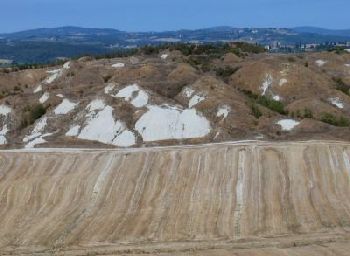
Vast fields of sunflowers, sprawling pine trees and slim cypresses, as well as vineyards as far as the eye can see - these are typical memories of Tuscany for all those who have been there. By contrast, Professor Dr. Beate Michalzik from the Friedrich Schiller University of Jena and her colleagues are interested in the more barren aspects of the region in Central Italy: In a study the Jena geographers analyzed the condition of the soil in the region known as 'Crete Senesi' between Florence and Grosseto, whose hills are typically characterized by erosion - for the moment at least, because the so-called badlands of Tuscany are acutely endangered.
Add a comment- Πληροφοριακά Στοιχεία
- Δημοσιεύθηκε : 22 Μάρτιος 2014
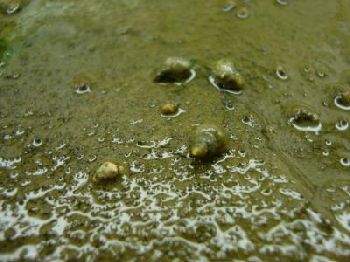
Researchers from the University of Liverpool are leading a new campaign to tackle a disease in cattle that costs the UK economy £300m each year.
The £1 million project will look at how to improve the detection and control of liver fluke, a disease that is transmitted by the dwarf pond snail and is found on over 75% of UK dairy farms.
Add a commentΔιαβάστε περισσότερα: Scientists to tackle burden of cattle disease on UK farms
- Πληροφοριακά Στοιχεία
- Δημοσιεύθηκε : 22 Μάρτιος 2014
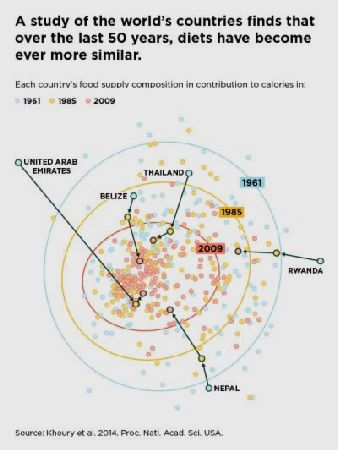
A comprehensive new study of global food supplies confirms and thoroughly documents for the first time what experts have long suspected: over the last five decades, human diets around the world have grown ever more similar-by a global average of 36 percent-and the trend shows no signs of slowing, with major consequences for human nutrition and global food security.
Add a comment- Πληροφοριακά Στοιχεία
- Δημοσιεύθηκε : 22 Μάρτιος 2014
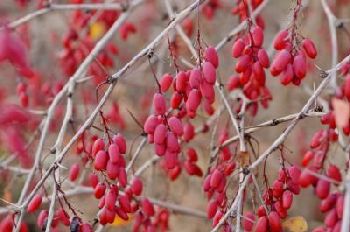
Plants are also able to make complex decisions. At least this is what scientists from the Helmholtz Center for Environmental Research (UFZ) and the University of Gφttingen have concluded from their investigations on Barberry (Berberis vulgaris), which is able to abort its own seeds to prevent parasite infestation. The results are the first ecological evidence of complex behaviour in plants. They indicate that this species has a structural memory, is able to differentiate between inner and outer conditions as well as anticipate future risks, scientists write in the renowned journal American Naturalist - the premier peer-reviewed American journal for theoretical ecology.
Add a commentΔιαβάστε περισσότερα: Are plants more intelligent than we assumed?
- Πληροφοριακά Στοιχεία
- Δημοσιεύθηκε : 22 Μάρτιος 2014
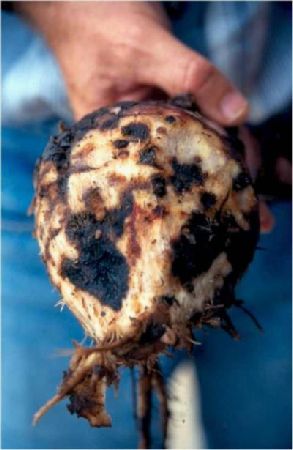
The banana variety Yangambi km5 produces toxic substances that kill the nematodeRadopholus similis, a roundworm that infects the root tissue of banana plants - to the frustration of farmers worldwide. The finding bodes well for the Grande Naine, the export banana par excellence, which is very susceptible to the roundworms.
Add a commentΔιαβάστε περισσότερα: Banana plant fights off crop's invisible nemesis: Roundworms
- Πληροφοριακά Στοιχεία
- Δημοσιεύθηκε : 15 Μάρτιος 2014
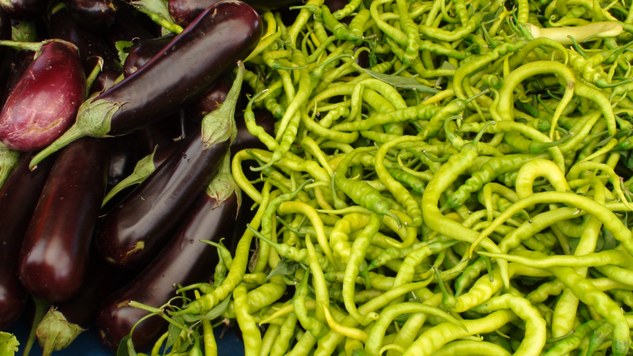
In the recently published EEA indicator report, food is identified as one of the main systems that has an impact on the environment. What is a food system? How does it affect us?
Add a commentΔιαβάστε περισσότερα: Europe’s agriculture: how to make food affordable, healthy and ‘green’
- Πληροφοριακά Στοιχεία
- Δημοσιεύθηκε : 15 Μάρτιος 2014

Current concentrations of particulate matter (PM10) are unusually high across a wide region of Western Europe. Since Wednesday almost three quarters of France has experienced PM10 concentrations above the limit of 50 micrograms per cubic meter (daily mean), with some areas recording more than double that level. Check the EEA’s near-real time air pollution map.
Add a commentΔιαβάστε περισσότερα: Very high air pollution levels across Western Europe


